What is a Magic Mouse?
It’s a mouse designed by Apple.
If you don’t know what it looks like, here are a few pictures:
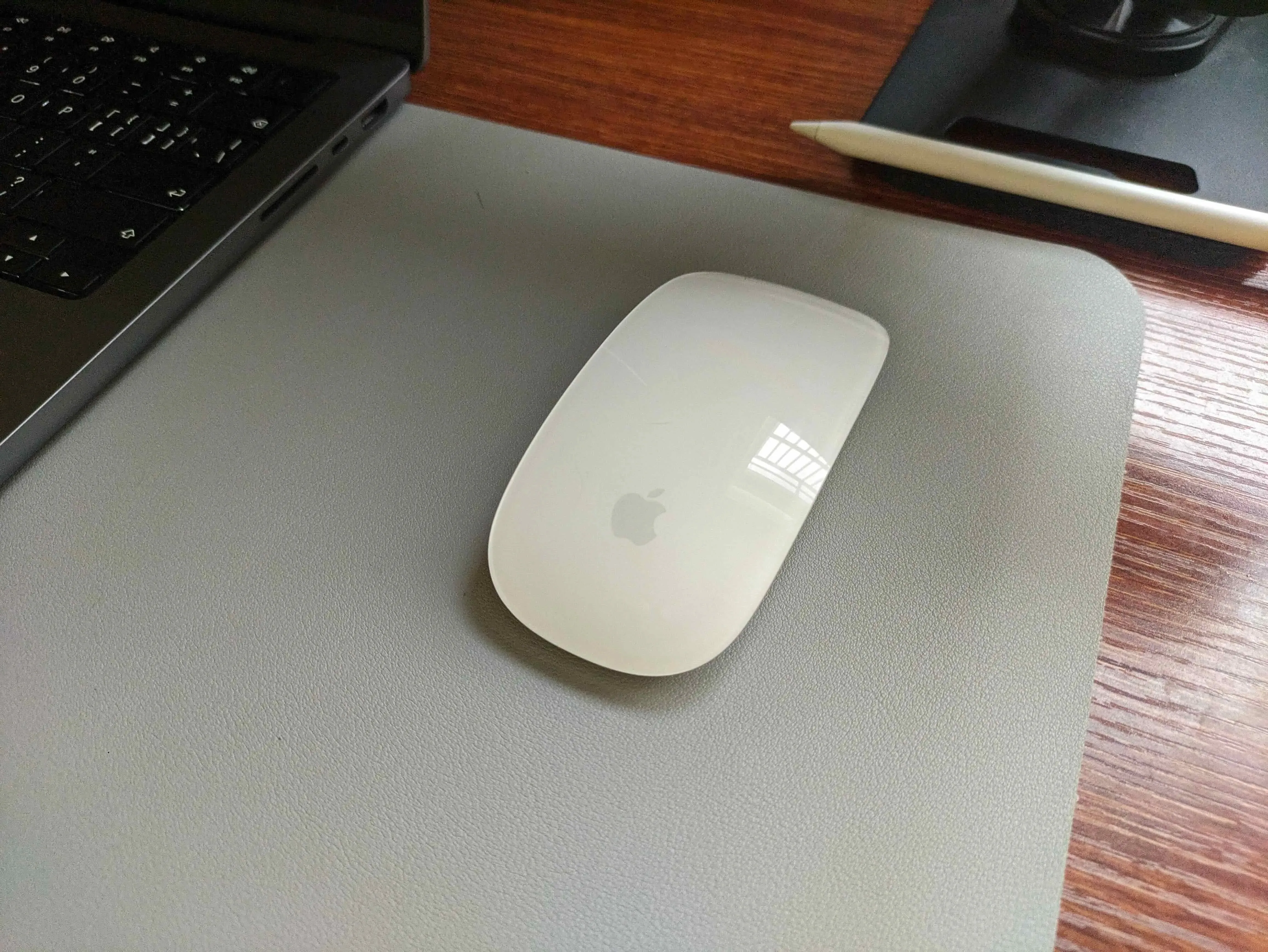
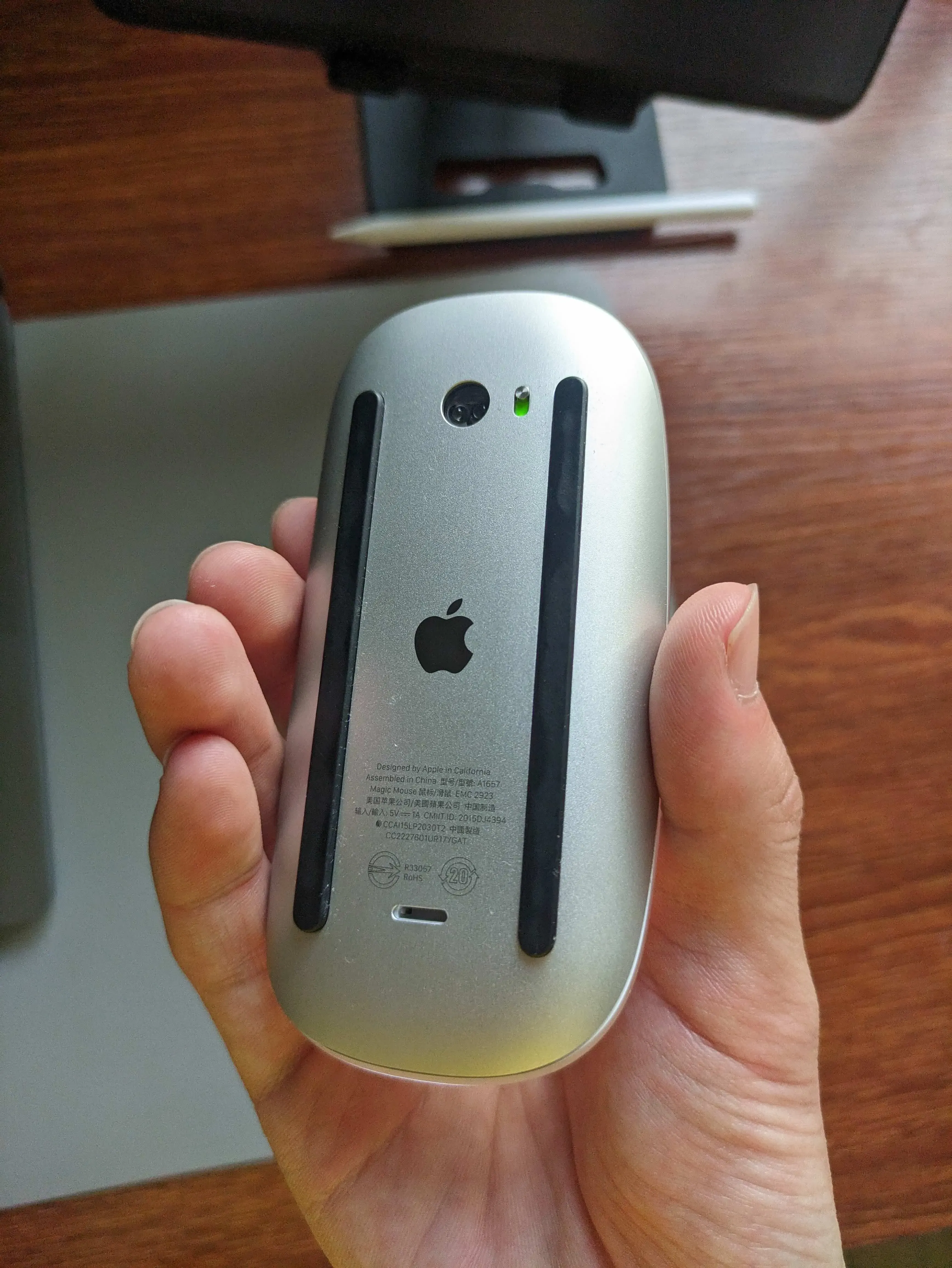
The Controversy of the Magic Mouse
I don’t know what kind of person you are. I’ll assume you’ve watched some tech reviews, like those from MKBHD. I also have to assume you’re someone who supports technological neutrality.
Technological Neutrality
By technological neutrality, I mean supporting all technologies having equal opportunities—for example, not opposing nuclear power plants just because the media says something about nuclear waste.
The Focus of the Controversy
Regarding the Magic Mouse, the biggest point of contention is that Apple is (one of) the wealthiest tech company. Wealth means having the best resources. They could hire the world’s best mouse designers to create the best mouse—except they haven’t. The Magic Mouse is not a good mouse, especially for those who prefer ergonomically designed ones. It feels bad in the hand; some would say it’s uncomfortable or “stiff.”
Before I bought this mouse, I searched for reviews online, yet no one seemed to say it was bad. I don’t know why—maybe Apple paid them. Maybe others just don’t care, so they don’t bother making videos or writing articles about it.
My Take
I don’t intend to write an article saying this mouse is terrible and that I deeply regret buying it. I have no interest in doing that. In fact, I knew about the ergonomic issues and the controversies before I bought it. I don’t care about the “feel,” and I don’t care what others think enough to change my mind. In fact, choosing this mouse is something I’m quite proud of. So, here’s my perspective.
The Magic Mouse is Not a Good Mouse
I’m not being sarcastic in the paragraph above. I truly believe the Magic Mouse is not a good mouse. In case you’re curious why:
- It provides no place to rest your palm or fingers;
- It has no physical buttons to distinguish between left and right clicks;
- It doesn’t support middle-clicking;
- It can only be used wirelessly, with a latency of about 70ms;
- It cannot be used while charging. Furthermore, to charge it, you have to flip it over. And the port is Lightning.
I think some might add:
- It has no macros or DPI control buttons;
- It has no RGB;
- It has no physical scroll wheel;
- It has no side buttons. In fact, besides the power switch, it has only one physical button (the entire top surface).
These are objective facts. I don’t know how you feel, but I believe most people wouldn’t consider using such a mouse for thirty seconds in their lives, let alone buying one for daily use. But I don’t care what others think. Especially since many people like their computers to have RGB, which makes me feel like they treat their computers as toys.
Only Apple Would Build a Mouse Like This
Let’s do a thought experiment. Imagine Apple didn’t make mice, and today Logitech released the Magic Mouse. What would happen?
The market would decide its fate.
Since Logitech already has successful product lines, they would kill the Magic Mouse because it wouldn’t sell well at all.
But Apple doesn’t have other mouse product lines. Apple doesn’t rely on selling mice to make money. What they do is simply what Apple does.
When Apple needs a pointing device, considering their style:
- The Magic Trackpad has no place to rest your hand. The Vision Pro has no controllers. They don’t think your hand needs to be on something, or holding something constantly, to be comfortable.
- No operation requires a middle mouse button. They don’t even like the right mouse button. By default, Macintosh calls up context menus via the Control key.
- The Magic Keyboard only connects wirelessly. They believe wired connections are a compromise. You can see this pursuit of wireless in the design of other products, like AirDrop, AirPlay, CarPlay, and Universal Control.
- Scrolling should be intuitive. A scroll wheel itself is confusing. You can’t find an element on the screen that corresponds to the rotation of a wheel versus the movement of content.
I’m Quite Proud to Have This Mouse
First of all, I’m not some “Apple fanboy.” I don’t like all of Apple’s products, like the iPhone, and I don’t agree with all of their philosophies, such as the design of the right mouse button. What I’m proud of is that I know what I want, so I can judge a product’s value based on my own needs and design philosophy, rather than being misled by the market or public opinion.
On one hand, I think this is something everyone should do. On the other hand, I don’t think everyone—perhaps not even most people—knows what they want.
I’m not saying you should also buy a Magic Mouse. In fact, I don’t recommend it for most people. Sometimes, I even joke about this mouse with my friends. But that doesn’t stop me from using it every day.
The Relativity of “Good”
When I say the Magic Mouse is “not good,” I mean from the perspective of mainstream aesthetics. In fact, the market agrees—the Magic Mouse’s sales are quite poor. But not everyone feels that way.
Aesthetics
By aesthetics, I’m not saying the mouse looks bad; I’m referring to the critical process before choosing a product.
Maybe you know that I used to make tech review videos, though that was years ago. I didn’t understand these principles back then, either do I stand by all of my views from that time now. Furthermore, having understood these principles, I find doing reviews quite meaningless.
The moral of the story is that, most of the time, you don’t need to care whether others think something is good or not, even if they are “professionals” (like people who test products and make reviews). I’m not saying you shouldn’t watch reviews, but when you do, you should focus on what the product actually is. Of course, the prerequisite is that you know what you want.