This is not a tutorial
I have no credential in Edge development, and sometimes I don’t know what I am doing. But this is what the Internet is all about.
Background
It’s among the things I got to know recently for edge computing. To be honest,
nobody is responsible for the suffering from web technology
Edge computing is created to run code in CDN, and it comes with the following advantages
- Very fast, low delay
- Service as a Platform, so that no pain in managing VPS
- Charged on demand
It’s pretty cool I assume, but never got the chance. To do something, I get to give it a shot recently
The Plan
I am working on some unified interface, in case my app wants to check for self update, which many people simply direct to the GitHub API, and in my case it is not so elegant to do so
Vercel supplies some Edge Functions, where the 500, 000 free requests usage is quit enough
Trying
First of all, the Vercel runtime is implemented in V8, so we’ve got to prepare some JavaScript
mkdir api.zhufucdev && cd api.zhufucdev
npm install octokit query-string
The query-string is a random pick
According to the documentations by Vercel:
First, create a new project and add an /api directory and a hello.ts file inside it. This is where the code that will be deployed as an Edge Function will live. The file extension can be .ts or .js. Alternatively, you can add an Edge Function to your existing project by adding a new file within the /api directory. The important part to note here is that while the file itself can be named anything, it should be located inside the /api directory.
Next.js is not a necessity, but all the scripts shall be put under the /api directory
Reading
some other documentations by Vercel,
vercel.json should be created to redirect the API URL
cat vercel.json

{
  "rewrites": [
    {
      "source": "/:match*",
      "destination": "/api/:match*"
    },
    {
      "source": "/",
      "destination": "/api/index"
    }
  ]
}
In /api/index.ts, first should export a configuration to declare the runtime being over the edge,
export const config = {
  runtime: "edge",
};
To really do something, export a default function,
export default (_: Request) => {
  return new Response(
    `Welcome to Steve's API. If you have no idea what are you doing, just let go.`,
  );
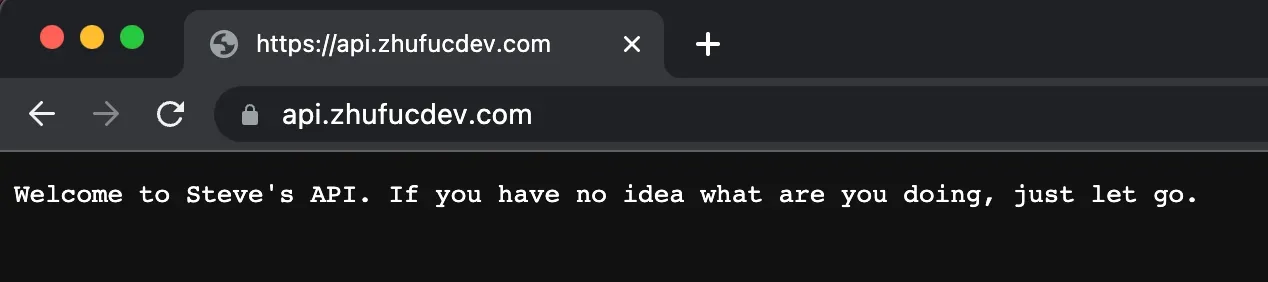
};
The edge runtime is built on ES module; when importing some non-ES modules
import querystring from "query-string";
import { Octokit } from "octokit";[09:22:40.656] Error: The Edge Function "api/release" is referencing unsupported modules:
[09:22:40.656] - api/release.js: querystring
[09:22:40.656] - @octokit: @octokit/auth-app
[09:22:41.547] Deployment completed
[09:22:41.497] NOW_SANDBOX_WORKER_EDGE_FUNCTION_UNSUPPORTED_MODULES: The Edge Function "api/release" is referencing unsupported modules:
- api/release.js: querystring
- @octokit: @octokit/auth-app
The documentation is assuming the following,
node_modules can be used, as long as they implement ES Modules and do not use native Node.js APIs
Both octokit and query-string should run natively on a web browser, but in this case they either don’t declare so, or don’t implement standard ES module, the deployment is a failure
I actually have no idea what to do, so I implemented my own parser to the GitHub API,
- const latest = await octokit.rest.repos.getLatestRelease({
-     owner: 'zhufucdev',
-     repo: alias[this.product],
- });
+ const response =
+  await fetch(
+      `https://api.github.com/repos/zhufucdev/${alias[this.product]}/releases/latest`,
+      {
+          headers: {
+              'Accept': 'application/vnd.github+json',
+              'Authorization': `Bearer ${ghToken}`,
+              'X-GitHub-Api-Version': '2022-11-28'
+          }
+      }
+  )
+ if (!response.ok) return undefined
+ const latest = await response.json() as ReleaseMeta
Finally replace the query-string library with some native ECMA Script,
const query = new URLSearchParams(/.*\?(.*)/g.exec(req.url)![1]);That’s almost all
If curious about the specifications, check out this repository,
Discussions
Edge computing, I have to say, is simply not that popular,
- As it’s a new concept, without a trial of the market
- And there’s no much information you can find on the web
In correlation, the resource allocated is minor,
- 128MB RAM
- 50ms timeout
- 950 fetches per run
- Limited API
I don’t know exactly, but other service provider should be no better than Vercel
Anyway, edge computing is a exploration on distributed computation, which is worth attention and support
But I had to say, Node JS s a mess. Just f**k off and go for Deno